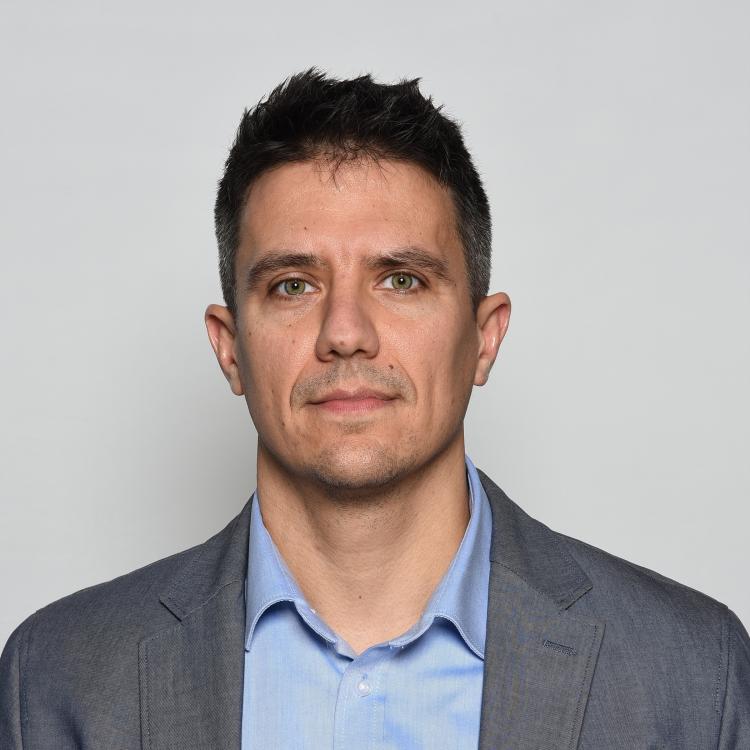
Florian Hollenbach
Associate Professor
Om
Telefon
Office: +4538152689
Departments
Institut for International Økonomi, Politik og Business
Room: POR/24.A-2.57
Skat
Analyse
Kvantitativ metode
Metode
Demokrati
Politik
Primary research areas
State Capacity
Countries and institutions differ greatly in their capacity to collect taxes or write and implement policies effectively. These differences in capacity have important downstream consequences for economic development, government service provision, and political accountability. Across different projects I study the determinants and consequence of differences in state capacity.
Illicit Monetary Flows & Corruption
I study and evaluate the effectiveness of policies combating illicit monetary flows and money laundering. For example, coauthors and I evaluate whether beneficial ownership registries can reduce illicit funds being invested in real estate or the effects of bank de-risking policies.
Quantitative Methods
In my methodological research has been focused on improving statistical methods to help researchers in obtaining unbiased estimates from imperfect observational data. A current project is aiming to evaluate and compare statistical power of staggered difference-in-differences estimators.
Money in Politics
I study how money impacts politics, both via legal and illegal means. I investigate questions such as how firms influence politics through lobbying or whether they can benefit from political connections.
How do we limit the detrimental effects of money in politics?
My main research interests lie in comparative political economy, with a focus on state capacity, fiscal policy, and illicit monetary flows. I study the interplay of business and democracy, democratic institutions and accountability, and money in politics. Related to my academic focus on corruption and illicit monetary flows, I am on the executive committee and researcher at the Anti-Corruption Data Collective, an initiative bringing together journalists, data analysts, academics and policy advocates to expose corruption.
Publications
See all publications21. marts 2023
The UK’s Landmark Effort to Stop Dirty Money Flowing Into its Real Estate Sector may be Working
Go to publicationjanuar 2023
The End of Londongrad?
The Impact of Beneficial Ownership Transparency on Offshore Investment in UK Property
Go to publication7. marts 2022
The Impact of Treasury’s Pilot Program on Stemming the Tide of Dirty Money Into US Real Estate
Go to publicationRecent research projects
The Determinants and Consequences of Legislative Capacity
While elected representatives write policy, it is implemented by unelected bureaucratic agents with their own preferences. The distribution of power between the legislature and the bureaucracy is determined by the legislature’s capacity for ex-ante policy design and ex-post oversight. Funded by the Independent Research Fund Denmark, we study what explains how much capacity legislatures grant themselves and the implications for democratic accountability.
Beneficial Ownership Registries and Money Laundering in Real Estate
In this project, we study the effects of beneficial ownership policies on illicit investments in real estate. Across different papers, we evaluate the effect of geographic targeting orders (GTOs) in the United States and the passing of the economic crime bill (ECB) in the UK.
Lessons for Combating Illicit Cross-Border Trade and Money Laundering from the Congo
In this project, we investigate trade-based money laundering and how de-risking affects illicit monetary flows. We analyze data from the largest leak of financial information in Africa – the Congo Hold-Up, containing millions of documents from BGFIBank in the Democratic Republic of Congo (DRC).
Outside activities
Anti-Corruption Data Collective , 2020 - now
Executive Committee Member / Researcher
https://acdatacollective.org/